Carla Accardi was born on October 9, 1924 in Trapani, Italy, eventually graduating high school there with a degree in the classics. In 1946 she moved to Florence to enroll in the Academy of Fine Arts and at the end of 1946 she moved to Rome, where she still lives and works.
Quick Facts
- Based in
- Rome, Italy
- Country
- Italy
- Born
- –
- Type
- Individual
Represented By
About Carla Accardi
Carla Accardi was born on October 9, 1924 in Trapani, Italy, eventually graduating high school there with a degree in the classics. In 1946 she moved to Florence to enroll in the Academy of Fine Arts and at the end of 1946 she moved to Rome, where she still lives and works.
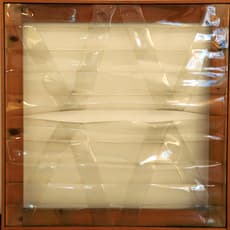
Carla Accardi was born on October 9, 1924 in Trapani, Italy, eventually graduating high school there with a degree in the classics. In 1946 she moved to Florence to enroll in the Academy of Fine Arts and at the end of 1946 she moved to Rome, where she still lives and works. In 1947, Accardi made her first abstract painting, Scomposizione (Breaking up). On March 15th of the same year, she signed the manifesto Forma (Shape) in Pietro Consagras studio with him, Ugo Attardi, Piero Dorazio, Mino Guerrini, Achille Perilli, Antonio Sanfilippo and Giulio Turcato. The manifesto was published the following month in a review of the same name, making the group official and putting them in stark contrast to the Marxist-inspired realism which had dominated and driven the artistic scenery in Italy. Accardi exhibited one of her first abstract compositions at the XXIV International Biennial Exhibition of Arts in Venice in 1948, the first one after World War II. Her first solo exhibition took place in 1950 at the Galleria Numero in Florence. Thus started an intense and constant period of activity during which she presented her work throughout Italy and Europe, and met the well known critic Michel Tapié, an exponent and theorist of a trend that he called art autre. In 1964, Accardi exhibited again in a personal hall at the International Biennial Exhibition of Arts in Venice. Among the ten canvases presented was a work entitled Ombra su Dallas (Shadow on Dallas), dedicated to recently assassinated President John Fitzgerald Kennedy, for which she won the Mario Carena Award and was included in the catalogue by art critic Carla Lonzi. Accardi and Lonzi developed a strong friendship and deep cultural fellowship that went beyond the artistic debate into the feminist movement. Accardi became so dedicated to the feminist cause that she was banned from teaching in 1971 for spreading the pamphlet Rivolta femminile (Female riot) to students at a junior high school in Rome. With Lonzis help, Accardi debuted an exhibition of works at the Galleria Notizie in Turin in 1965, including Tenda (Curtain), a major departure from previous works that was composed of thirty-six panels of sicofoil in different sizes and painted in fluorescent greens and reds. Accardi endeavoured to inspect the deepest relationships between work and environment, while staying true to painting, by using plastic as light, mixture, fluidity with the surrounding environment: maybe to take a totem value away from the painting." This foray into sicofoil, besides nourishing a specific climate in Turin in the 60s before arte povera, led her to make real inhabitable structures and environmental works, such as Triplice tenda (Triple curtain), 1969-71, then exhibited in the Art-Environment section of the Biennial Exhibition of Venice in 1976. In 1975, after years of devotion to sign and color, Accardi began making sicofoil works devoid of painting, explaining that sign had changed, it had been transformed and had become routine, anonymous, it only wanted to be a particle, always out of a structure, but infinitely changing then I came to make paintings where there was no sign at all. They were only transparent, expression was nullified. She eventually returned to using color, creating ground installations made with painted wood frames. Accardis artistic career and contribution was honoured in three different exhibitions in 1983: the first at Pinacoteca Comunale, Loggetta Lombardesca in Ravenna, arranged by Vanni Bramanti; again with works by Alighiero Boetti at PAC Padiglione dArte Contemporanea in Milan, arranged by Corrado Levi, and finally at Salerniana in Erice, arranged by Palma Bucarelli. Since then, she has participated in important collective and documentary exhibitions about the Forma group and been included in all of the most significant acknowledgements of the Italian Post-war movement. She has had various solo exhibitions in private galleries and museums all over the world: in 1985 at Istituto Italiano di Cultura a Madrid; in 1988 at XLIII Biennial Exhibition of Venice, again in a personal hall; in 1989 at Galleria Civica in Modena; in 1991 at Castello di Volpaia in Radda in Chianti; in 1994 at Castello di Rivoli in Turin; in 1995 at Ludwigshafen Kunstwerein; in 1997 at Villa Medici, Accademia di Francia in Rome; in 1999 at Kunstmuseum in Bonn; in 2001 at P.S.1 Contemporary Art Center in New York; in 2002 at Musée dArt Moderne de la Ville in Paris and in 2004 at MACRO Museo dArte Contemporanea in Rome. In 2007, Accardi created an original project, alongside Lucio Fontana, for the Martha Herford Museum Zentrum Forum in Herford. The project consists of built-in ceramic surfaces combined with music specially composed by Gianna Nannini, and was subsequently shown at the Moscow Museum of Modern Art in Moscow in 2008, the Auditorium of Rome, Sala Luis Quesada Garland in Lima in 2009, and at Centro Cultural Recoleta in Buenos Aires in 2010.
Art Fair Career Timeline
Works in Museum Collections

Collection data via The Metropolitan Museum of Art, Harvard Art Museums (CC BY), and Europeana
Related Artists
Discover more artists →
Frequently Asked Questions
What medium does Carla Accardi work in?
Carla Accardi primarily works in Painting.
Where is Carla Accardi based?
Carla Accardi is based in Rome, Italy.
When was Carla Accardi born?
Carla Accardi was born in 1924 and died in 2014.
What is Carla Accardi's nationality?
Carla Accardi is from Italy.