Sherrie Levine came to prominence as one of a generation of artists who, during the 1970s and early 1980s, became known under the label of postmodernism. One of the characteristics of her work that drove critics at the time, Craig Owens in particular, to identify it as such was its use of appropriation.
Quick Facts
- Based in
- New York, NY, USA
- Country
- United States
- Born
- Type
- Individual
Represented By
About Sherrie Levine
Sherrie Levine came to prominence as one of a generation of artists who, during the 1970s and early 1980s, became known under the label of postmodernism. One of the characteristics of her work that drove critics at the time, Craig Owens in particular, to identify it as such was its use of appropriation.
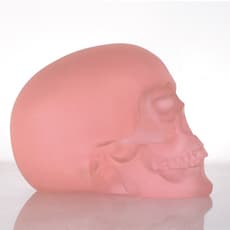
Sherrie Levine came to prominence as one of a generation of artists who, during the 1970s and early 1980s, became known under the label of postmodernism. One of the characteristics of her work that drove critics at the time, Craig Owens in particular, to identify it as such was its use of appropriation. It is a strategy that she uses in an on-going exploration of the re-contextualization and re-working of the found object, a questioning of the authenticity and autonomy of the art object and its status as a commodity. Levine’s source materials cross all media, encompassing early modern photography, modernist furniture, book plate reproductions of paintings, sculptures and found and commercially produced objects. The mechanism of appropriation she employs is complex, ranging from direct casting of a sculptural source, through drawing from reproduction to the creation of a work only imagined in its original incarnation. The book plate paintings reproduced printed images of the works which were their subjects, complete with their flaws and colour inaccuracies, while sculptures such as Newborn or La Fortune (after Man Ray), re-created a work from a specific documentary image of its installation, or gave form to the billiard table imagined in Man Ray’s famous 1938 painting. In contrast to the apparent simplicity of the characterisation suggested by the label ‘appropriation art’, the conceptual model at work was rarely a simple case of the re-fabrication of an image or object. At the heart of Levine’s process of reference and repetition has been the investigation of the aura of the work of art. It was Walter Benjamin’s contention that the mechanical reproduction of the work of art would tend to erase its auratic presence. Levine’s intention in re-creating photographs, paintings and sculptures was to subvert this suggestion. The works hold in balance the opposing charges of detachment and desire. Sherrie Levine was born in Hazelton, Pennsylvania, grew up in St. Louis and moved to New York in 1975. She has had one-person exhibitions at the Hirshhorn Museum, Washington D.C., 1988; the High Museum of Art, Atlanta, 1988; the San Francisco Museum of Modern Art, San Francisco, 1991; the Philadelphia Museum of Art, Philadelphia, 1992; and Portikus, Frankfurt, 1994, and most recently at the Museum Haus Lange, Krefeld, Germany. Levine divides her time between New York City and Santa Fe.
Art Fair Career Timeline
Related Artists
Discover more artists →
Frequently Asked Questions
What medium does Sherrie Levine work in?
Sherrie Levine primarily works in Painting, Sculpture.
Where is Sherrie Levine based?
Sherrie Levine is based in New York, NY, USA.
When was Sherrie Levine born?
Sherrie Levine was born in 1947.
What is Sherrie Levine's nationality?
Sherrie Levine is from United States.